
Buying Guides
Black Tobiano Spotted Saddle Horse Gelding for Sale: Group Rides & Camping Fit
· 8 min read
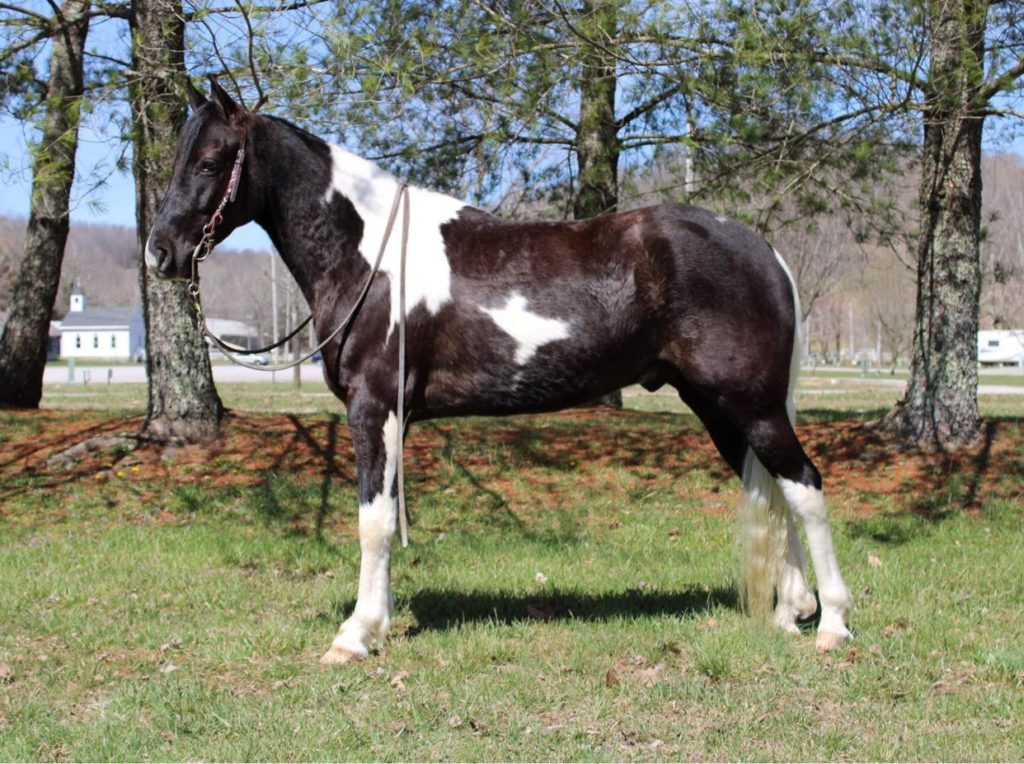
Compare Blaze, Ali and Bandera by recorded size and asking price, then ask practical questions about shared trail rides, overnight routines and the evidence behind each listing.
By Equine Horses Ranch · Catalog snapshot: November 20, 2026
Searching for a black tobiano Spotted Saddle Horse gelding for sale often begins with striking black-and-white markings and the hope of a comfortable trail partner. The more useful question is what a particular gelding will be like on your actual outings: riding with friends, waiting while another rider adjusts tack, returning to the trailer or spending a night away from home.
This guide focuses on those shared-ride and camping decisions. It uses three recorded ranch listings as starting points, not as proof that every horse has the same experience. Color narrows a search; the horse’s established routine, your riding ability and a professional assessment determine whether the match deserves further consideration.
Start with three comparable catalog records
Blaze is recorded as a ten-year-old black tobiano Spotted Saddle Horse gelding, 15.1 hh, with an asking price of $7,500. Ali has the same recorded age, color, sex and height, with an asking price of $7,900. Bandera is also recorded as a ten-year-old black tobiano gelding, at 15.2 hh and $8,500. All three list Gaited Trail as their discipline.
That makes them useful comparisons rather than interchangeable choices. Ali’s recorded asking price is $400 above Blaze’s; Bandera’s is $1,000 above Blaze’s. Those differences do not establish better training, better health or a more suitable temperament. Ask what horse-specific evidence explains each description and whether the price and details remain current.
The ages and measurements above are November 20, 2026 catalog values, not newly verified examinations or confirmed availability. Height in hands is not decimal notation: 15.1 means fifteen hands and one inch; 15.2 means fifteen hands and two inches. A one-inch recorded difference alone tells you little about saddle fit, mounting comfort or appropriate rider weight. Have those questions assessed individually.
Open the Spotted Saddle Horse collection for additional comparisons. Keep a short written list of what you need and what remains unanswered for each candidate.
Separate markings, identity and registration
Black describes the recorded base color; tobiano describes a white-marking pattern. The Spotted Saddle Horse Breeders’ & Exhibitors’ Association provides information about color patterns, registration and the breed’s performance, sport-horse and trail programs. A spotted coat does not, by itself, establish registry status or training.
Ask to match the horse in front of you to his documents using identifying markings, registered name and any recorded identification. A barn name may differ from the registered name. If a listing states SSHBEA registration, request the certificate and discuss transfer requirements; this guide does not independently authenticate papers for Blaze, Ali or Bandera.
Clear photographs from both sides, front and rear can help you compare markings. They cannot show how the horse moves, behaves when separated from companions or responds to an unfamiliar rider. Treat appearance and performance as different parts of your investigation.
Describe the rides you actually intend to take
Before arranging a visit, describe your ordinary outing, not an idealized one. Do you ride for an hour near home, spend several hours on organized trails, or camp with a group? How often do you ride, what supervision is available, and what experience do you have with gaited horses?
A comfortable pace for one rider may not suit another rider’s balance or companions. Ask about the gelding’s normal walk, his other established gaits, transitions and the cues used by his regular rider. Do not assume every Spotted Saddle Horse moves identically or needs the same rein contact. A gaited-horse trainer can help interpret a demonstration and whether you can reproduce the established cues.
For a mixed group, discuss the pace your friends maintain and how often everyone stops. A horse that prefers to travel ahead may require different handling from one accustomed to following. Neither description is automatically good or bad; the relevant issue is compatibility with your plans and skill.
Ask about group behavior without staging risky tests
Ask the ranch for specific, recent examples rather than a universal label such as “goes anywhere.” Useful questions include:
- When did he last ride with a group, and who handled him?
- Has he regularly traveled at the front, middle and rear, or mainly in one position?
- How does he respond when companions move away or another horse approaches?
- What happens during a stop, a change of direction or the return toward the trailer?
- Does he need a particular rider, tack arrangement or preparation to settle into the outing?
- What difficulties has the handler encountered, and how were they managed?
Discuss the answers with your trainer before choosing an assessment. Have a knowledgeable handler demonstrate the horse’s familiar work first. Do not deliberately startle him, expose him to gunfire, force a difficult obstacle or separate him abruptly to test claims. A purchase visit should not become an improvised endurance or bravery challenge.
If video is available, request a dated, continuous segment of ordinary handling and relevant riding rather than only a highlight reel. If no video exists, arrange an appropriate in-person demonstration. Video is helpful evidence, not a requirement for making a careful shortlist, and neither video nor one visit predicts every future situation.
Investigate the overnight routine separately
Trail riding and camping experience are related but different. A horse may be regularly ridden outdoors without having stayed overnight away from his usual herd and stable. For a camping prospect, ask where the horse has stayed, when, for how long and with whose supervision.
Discuss the actual containment arrangement he knows: a stall, pen, trailer-side setup or another supervised system. Ask how he was introduced to it, what feeding and watering routine was used and whether there were problems with settling, handling or loading afterward. An account of prior camping should identify circumstances, not promise that he can be left unattended anywhere.
Do not copy a listing’s mention of picket lines or electric fencing into a new setup without competent advice. Your facilities, equipment, neighboring horses and supervision may be different. Have an experienced professional assess the proposed arrangement, and follow the destination’s horse-management rules.
Ask about familiar feed, turnout, companions and transport routines so you can plan continuity after purchase. Your veterinarian and yard manager can help create an arrival and separation plan appropriate to the receiving property. This article is a buying checklist, not a tying, fencing or veterinary instruction manual.
Make health questions specific to the intended work
A repeated phrase such as “vet checked” does not tell you the date, scope or findings of an examination. Request dated records and discuss any known history, medications, maintenance needs and periods out of work with your own veterinarian. Ask what has changed since the listing was written.
The American Association of Equine Practitioners’ purchase-exam guidance emphasizes communication with your veterinarian so the examination can be tailored to your intended use. Tell the veterinarian about anticipated ride length, terrain, travel and management. Let that professional recommend the appropriate examination and any additional testing; coat pattern and asking price cannot determine the clinical plan.
If your goal involves longer outings, do not infer current fitness from an old account of distance ridden. Discuss recent workload and a realistic transition with qualified professionals. An examination helps inform a decision; it is not a promise of lifetime soundness. This guide has not been individually reviewed by a veterinarian and does not certify the health of the featured horses.
Compare the complete purchase, not just the asking price
Make a separate line for examination costs, equipment assessment, delivery and ongoing care. A lower purchase price may leave more room in your budget, but it does not resolve an uncertain training history or mismatch with your riding group.
Use the horse-buying steps and written purchase terms before paying. The ranch’s terms specify a 40% deposit applied to the purchase price and the remaining 60% before departure. Review the 30-day money-back guarantee, including its conditions and return-transport responsibilities, rather than assuming that every associated expense is refundable.
For travel or delivery, confirm the horse’s present location, appointment, destination and arrangements with the ranch. Discuss transport costs and any applicable offers in writing through the hauling page. Do not infer free delivery to every destination from a headline, and ask the transporter and veterinarian about documents required for your route.
Short answers for the final shortlist
Does black tobiano mean the horse is an American Paint Horse?
No. A coat-pattern description is not a substitute for breed identification. The three examples in this guide are recorded as Spotted Saddle Horses. Use the individual documents and registry information to resolve identity questions instead of assigning a breed from photographs.
Which of Blaze, Ali and Bandera is best for my family?
The shared age and color fields cannot answer that. Start with the people who will ride and handle the horse, their experience, supervision and planned outings. Ask the same practical questions for each candidate and have your trainer assess the individual match. No recommendation here assigns one horse to all riders.
Can I make progress without a riding video?
Yes. Review records, prepare specific questions and arrange a professionally supervised visit. Clear photos establish visible details; a suitable demonstration helps assess handling and riding. Missing video should not be replaced with invented experience or blanket safety claims.
What should I send when I inquire?
Send the horse’s name, your riding experience, group-riding plans, whether overnight trips matter, the help available to you and your destination. Include the main questions still unanswered. Contact Equine Horses Ranch to discuss your shortlist, or browse the catalog if color is flexible and riding fit comes first.
Sources and next reading
- SSHBEA: breed programs, registration information and color-pattern guidance. General reference, not confirmation that the ranch or any featured horse holds awards or affiliations.
- AAEP: Don’t Skip the Purchase Exam. General veterinary guidance; your veterinarian determines the individual examination.
- Trail-horse collection for comparisons by intended riding, and the horse-buying guide for the broader purchase process.