Buying Guides
Browse Horses for Sale by States: Compare Location, Costs and Delivery
· 8 min read
Searching by state can make horse shopping more manageable—but the seller’s address, the horse’s actual location and your destination are three different facts to verify. Use this guide to build a practical regional shortlist.
By Equine Horses Ranch · Published November 19, 2026
How do you browse horses for sale by states?
Choose the horse's actual location as your starting filter, then compare suitability, the cost of an assessment visit and delivery to your home. A state filter is a search tool, not evidence that a listing is current, nearby or a good match. Before widening the map, decide what riding you want to do and what support you need from a trainer.
Equine Horses Ranch is in Brownsville, Texas. Our horse catalog is not a nationwide directory, and this guide does not claim that we keep horses in every state. Buyers considering a horse here from another state should discuss the individual horse and transport arrangements with the ranch. Availability, delivery coverage and costs must be confirmed for the particular purchase.
Unlike a breed guide, this article focuses on geography: how to compare local and distant listings, avoid misleading location labels and organize an interstate purchase. For detailed training comparisons, use our separate Western Horses for Sale guide.
Make three locations explicit
An advertisement may show a seller's business address, the place where a horse is currently kept or a broad market area. Those are not interchangeable. Ask where the horse can actually be examined and tried, who owns it and who is authorized to agree to the sale. If the horse is at a trainer's yard, clarify who arranges access and supplies records.
Your delivery address is a third location. Give a town, state and receiving-facility details when requesting a transport estimate. Do not assume a seller's “serving your state” wording means the horse is already nearby or delivery is included.
Record the actual town as well as the state. Two horses in the same state can involve very different travel plans. Brownsville is in the Rio Grande Valley in South Texas; use the confirmed appointment location rather than a general Texas label to plan your visit.
Browse by region before expanding to all 50 states
Start with a search radius that makes an assessment practical. If suitable candidates are scarce, expand to neighboring states or a larger region. Keep the riding requirements unchanged while broadening geography; otherwise a growing list can become harder to compare rather than more useful.
The following groups are navigation aids, not claims about inventory, typical prices, horse quality or regional breed availability. State names can help organize saved listings and travel research. For every group, use the same horse-specific questions and check the destination's current entry requirements before transport.
Texas and the South Central states
Organize searches in Texas, Oklahoma, Arkansas and Louisiana together if those states make sense for your travel plans. For a horse in Brownsville, start with the ranch catalog, then ask for the actual visit location and a written transport estimate to your destination. An interstate purchase from Texas to Louisiana is not the same administrative question as a move within Texas.
Our out-of-town Brownsville buying guide covers appointment planning separately. Use this article for comparing the geography and costs of several candidates, rather than treating every Texas listing as equally accessible.
Western states
You might group California, Oregon, Washington, Nevada, Arizona, New Mexico, Utah, Colorado, Idaho, Montana, Wyoming and Hawaii for saved searches, with Alaska considered separately according to the journey. Do not use that grouping as a transport plan: a mainland road trip and a journey involving air or sea travel require different arrangements.
For any distant candidate, settle how you will assess the horse before paying. Ask a qualified local professional about an independent visit or examination if you cannot attend. A low advertised price can lose its appeal once travel and delivery are included.
Midwest and Northern Plains
For organizational purposes, group North Dakota, South Dakota, Nebraska, Kansas, Minnesota, Iowa, Missouri, Wisconsin, Illinois, Indiana, Michigan and Ohio. Compare the horse's actual town and your receiving location, not a presumed regional distance. Evaluate the complete trip and schedule before committing to several appointments.
If your shortlist spans this region and Texas, use identical assessment notes. Geography should not cause you to accept less information about a distant horse than you would request locally.
Southeast and Mid-Atlantic
Saved searches might include Kentucky, Tennessee, Mississippi, Alabama, Georgia, Florida, South Carolina, North Carolina, Virginia, West Virginia, Maryland and Delaware. Verify where each horse is kept and whether the seller can arrange an appropriate demonstration for your intended use.
If you plan to buy in Texas and bring the horse to one of these states, confirm destination requirements rather than relying solely on Texas paperwork. The receiving facility or event may also have its own entry conditions.
Northeast and New England
Group Pennsylvania, New Jersey, New York, Connecticut, Rhode Island, Massachusetts, Vermont, New Hampshire and Maine if that helps manage your search. Keep separate notes for the District of Columbia and any territories relevant to your destination.
A large regional shortlist is only useful if it has a decision structure. Keep two or three serious candidates, verify their status and compare the feasibility of a supervised assessment. Do not schedule delivery simply because an online listing is easy to find.
Compare the cost of a local horse with a distant horse
Use a written budget rather than comparing asking prices alone. Include the horse, trainer assistance, the purchase examination, assessment travel, any necessary documents, transport, equipment and the receiving arrangement. Ask which costs are estimates, which are fixed and which party pays them.
As an illustration—not a ranch quote—a horse advertised at $10,000 with $2,000 of assessment travel and delivery has a $12,000 subtotal before other expenses. A $11,500 local horse with $500 of those costs reaches the same subtotal. That does not make the horses equally suitable; it shows why the lower advertisement price may not settle the decision.
Do not infer market averages from a few state-filtered results. Training, individual history, seller terms and the date of the advertisement all affect comparisons. Keep the cost worksheet separate from your trainer's assessment so price does not conceal an unsuitable match.
Use one comparison sheet across states
For each candidate, record its name, actual location, listing URL, last contact date, current seller-confirmed status, advertised discipline, requested records and assessment options. Mark unknown items clearly. A search result or an undated availability flag is not a substitute for recent contact.
Ask the same substantive questions regardless of state:
- What work has this horse done recently, and with which rider?
- Can my trainer assess the horse doing the activity I intend?
- What medical history and identity documents can the seller provide?
- Where will the examination and supervised trial take place?
- What written terms apply before and after delivery?
- Who arranges transport, and what is included in the quote?
For breed-focused searches, compare the existing Quarter Horse collection or Paint Horse collection before deciding whether expanding geography is necessary. These are ranch collections, not separate inventories in other states.
Check destination requirements with official sources
USDA APHIS explains that receiving states and territories maintain their own live-animal entry requirements. Its page links to the state agriculture department directory and state animal health officials. Use those official contacts to check the rules for your actual destination and planned travel date.
Ask your veterinarian and transporter which identification, veterinary inspection documents, test results or permits apply to the specific movement. Do not assume one state's deadlines apply everywhere, or that last year's paperwork will still satisfy the destination. Confirm any receiving-facility requirements as well.
This guide deliberately does not publish a fixed fifty-state paperwork checklist. Requirements can change, and a static table can become misleading. The official destination authority and the professionals arranging the journey are better sources for the current requirements.
Keep the examination independent of geography
Distance should not reduce the standard of information you require. The AAEP purchase-examination resources explain that an examination provides information about the horse at the time of examination and should reflect its history, intended use and the purchaser's concerns. It is not simply a pass-or-fail certificate.
Discuss your intended riding with your veterinarian and trainer. If you cannot attend, agree how findings will be communicated and what remains unassessed. A veterinarian's examination does not replace a rider-suitability assessment, and a favorable sales video does not replace either. No veterinary review of ranch listings is claimed in this article.
Agree to the sale and delivery in writing
Identify the exact horse, seller and buyer in the agreement. Clarify the deposit, balance deadline, documents to transfer, any agreed conditions and what happens if the proposed journey changes. Keep written copies rather than relying on messages scattered across several listing platforms.
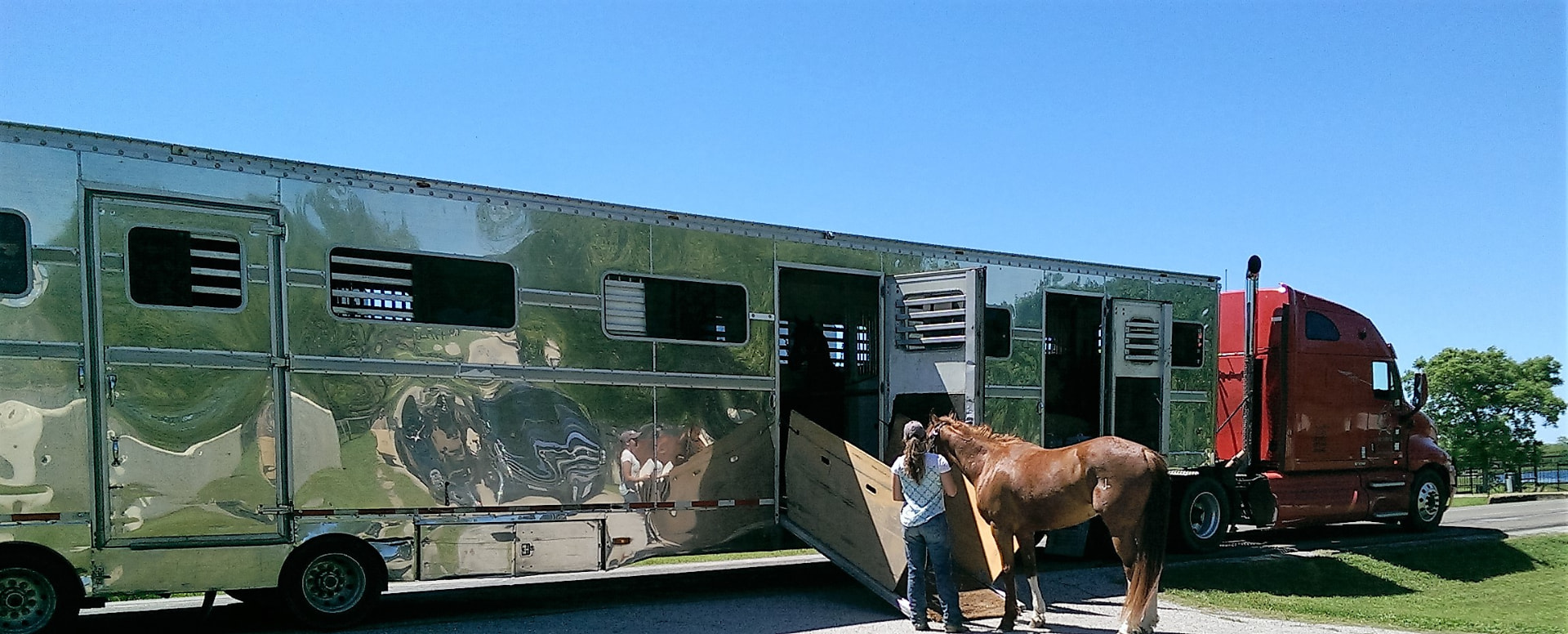
For a ranch purchase, read the purchase terms and discuss hauling before committing. Confirm delivery coverage for your state, the quote, responsible parties, proposed timing and the receiving arrangements. Do not assume nationwide or free delivery from this guide.
Prepare the destination so the horse can arrive to appropriate care. Ask for its existing feeding and management routine, and make plans with your professionals for settling in and starting work. Delivery is the beginning of the new partnership, not proof that every advertised behavior will transfer immediately to a different rider and setting.
State-search questions answered
Does browsing by state show only horses physically there?
Not necessarily. Platforms and sellers may use different location conventions. Ask for the horse's current location and the assessment address before arranging travel or payment.
Should I buy locally instead of out of state?
Compare suitability, your ability to assess the horse and total costs. Local access may simplify a visit, but proximity alone does not establish quality. A distant purchase needs a workable assessment and delivery plan, not just an appealing price.
Can Equine Horses Ranch deliver to my state?
Contact the ranch with your destination and the horse you are considering. Confirm service coverage, pricing and arrangements directly; this article makes no blanket delivery promise.
Where should I begin?
Browse horses at the Brownsville ranch, save a small shortlist and provide your state, riding experience and intended use when you inquire. Then compare the visit, examination and delivery plan before making a decision.