
Buying Guides
Chocolate Overo Tennessee Walking Horse Gelding for Sale: Compare Gait and Trail Fit
· 8 min read
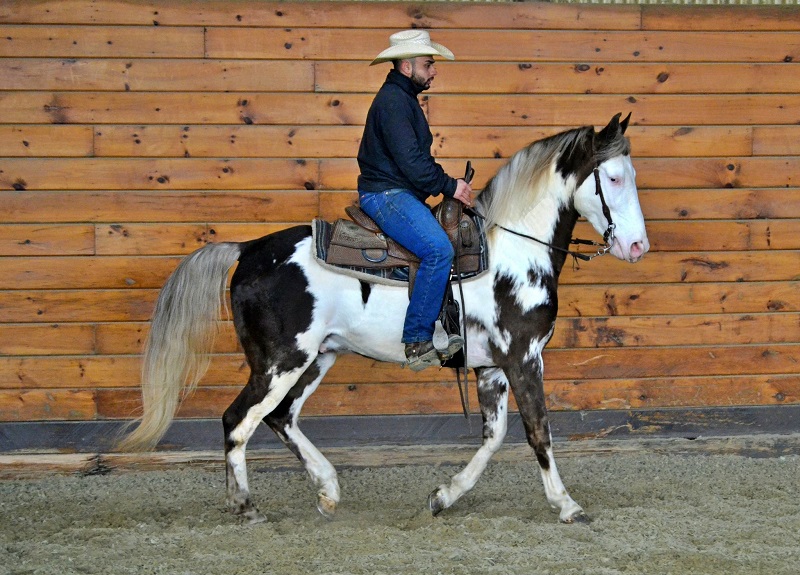
Start with Akira’s recorded listing, compare other spotted Walking Horse geldings, and assess gait, familiar cues, trail pace and documents before choosing a partner.
By Equine Horses Ranch · Catalog snapshot: November 20, 2026
A chocolate overo Tennessee Walking Horse gelding for sale is a very specific search. It combines a seller’s color description, a spotted pattern, a breed and a sex. Those details help you find a listing, but the next decision is about the horse’s actual movement, established cues and suitability for your intended trail riding.
Akira is the catalog horse recorded with this combination. This guide explains how to investigate that match and compare alternatives without assuming that a striking coat or a gaited breed name proves a comfortable, suitable ride. It focuses on gait and trail pace, rather than repeating our stock-horse or mare guides.
Akira’s listing: a starting point, not a complete assessment
Akira is recorded as a nine-year-old Tennessee Walking Horse gelding, chocolate overo, 15.1 hh, with an asking price of $8,500. His listed discipline is Gaited Trail.
These figures are a November 20, 2026 snapshot of the catalog, not independently verified measurements, registration records or confirmation of current availability. Open his individual page for photographs and ask the ranch which information is current before arranging an appointment.
The phrase Gaited Trail describes the listing category. It does not identify which gait Akira performs most consistently, the cues his regular rider uses, or the trail environments he has encountered. Those are the next questions to resolve.
Two other recorded listings offer comparisons with different coat descriptions:
- Cougar is listed as an eight-year-old chocolate tobiano Tennessee Walking Horse gelding, 15.1 hh, at $7,900, also in Gaited Trail. He shares Akira’s recorded height but not the recorded pattern description.
- Bonito is listed as a nine-year-old black tobiano Tennessee Walking Horse gelding, 16 hh, at $7,800, in the same category. His different height should prompt a rider-fit discussion, not an assumption that he is more or less comfortable.
Cougar’s asking price is $600 below Akira’s, and Bonito’s is $700 below. These are catalog comparisons, not a market appraisal or an explanation of why the prices differ. Request the same riding and handling information for each horse so color does not become the only deciding factor.
Understand gait terms before comparing the ride
The Tennessee Walking Horse Breeders’ and Exhibitors’ Association gait guide describes the flat walk, running walk and canter, and notes that individual Walking Horses may perform other gait variations. This is breed education, not a statement that Akira, Cougar or Bonito has demonstrated every gait described by the association.
Ask the person presenting each horse to name the gait being shown and explain the cues used to obtain and maintain it. What feels comfortable to one rider may feel different to another. A horse may move differently with changes in pace, rider balance, footing or tack; ask a trainer familiar with gaited horses to help interpret what you observe.
Do not judge the ride solely by speed or a short edited clip. Look for a demonstration appropriate to your intended riding, with transitions, stopping and steering as well as sustained movement. Ask whether the horse can maintain the pace you need without constant correction. Distinguish a naturally offered movement from one that depends on a specific preparation or training routine.
Decide what trail pace your group actually needs
A smooth-feeling ride is only part of trail suitability. Consider who you ride with, the terrain you use and how long your ordinary outings last. A horse comfortable moving briskly may need a different assessment from one intended to stay with slower companions.
Before your appointment, write down the conditions you expect: riding alone or in a group, leading or following, typical footing, hills, road crossings and rest stops. Ask which of these the gelding has genuinely experienced and when. Do not interpret “trail horse” as evidence that every environment has been covered.
Useful questions include:
- Can he travel at the group’s ordinary walking pace, and what cues does his rider use to regulate it?
- What happens when another horse moves ahead, stops or leaves the group?
- Has he been ridden alone, and what was the setting and date of the most recent outing?
- How does the familiar rider manage transitions between relaxed walking and a faster gait?
- What does he know about standing during mounting, breaks and dismounting?
- Which obstacles or terrain remain outside his experience?
Ask for specific examples rather than a blanket promise. A controlled viewing should not involve creating frightening situations or pushing the horse beyond his training to test a label.
Treat chocolate overo as recorded wording, not a genetic report
Akira’s color field says Chocolate Overo; Cougar’s says Chocolate Tobiano. In this article these are the catalog descriptions, not independently confirmed genetic classifications. Do not convert the word chocolate into a claim about a particular dilution gene, or infer parentage or registration from a pattern name.
Request recent photographs taken in ordinary light, showing both sides, the face and distinctive markings. Ask when the images were taken and compare the horse’s identity with any registration or veterinary documents supplied. A recognizable coat pattern can help with identification, but it cannot establish health, temperament or gait.
If an exact color or pattern classification matters for showing, registration or another purpose, discuss the relevant requirements with the registry or a qualified professional. Ask for documentation tied to the individual horse where needed. Do not assume that a sales label answers a registry’s separate question.
Compare the rider’s cues, saddle and balance
Tell the ranch whether you have ridden gaited horses before, what kind of instruction you have received and what you can do confidently. Ask how the gelding’s familiar rider uses seat, legs and rein contact, and whether your usual riding approach is compatible with his training.
Watch a knowledgeable rider demonstrate the horse before deciding whether to mount. Agree on an appropriate supervised evaluation. A trainer experienced with gaited horses can help separate unfamiliar cues from a mismatch between horse and rider.
The recorded 15.1 hh measurement means 15 hands and one inch, not 15.1 decimal hands. Ask when the horse was measured and how. Height alone does not establish carrying capacity, ease of mounting or saddle fit; assess build, conditioning, tack fit and your balance with suitable professional help.
Discuss the horse’s ordinary shoeing or hoof-care arrangements and riding equipment. Ask which aspects are routine and whether there are known care or maintenance needs. Changes to tack or hoof care should be discussed with the relevant professionals, not made solely to imitate a sales demonstration.
Check routine and records alongside the gait
A comfortable demonstration does not answer every management question. Ask who handles the horse daily, how often he is ridden and what happens after time off. Observe appropriate leading, grooming, feet handling and tacking up. Discuss catching, loading and standing at the trailer in the contexts relevant to your home.
Ask whether registration papers are available, whether their identifiers match the gelding and whether the seller can complete a transfer. A breed field reading Tennessee Walking Horse is not, by itself, proof of TWHBEA registration. Keep identity, registration, riding history and veterinary information as separate checks.
For health questions, request dated veterinary, vaccination, dental and farrier information that can be shared with your veterinarian. The AAEP purchase-examination guidance recommends communication between buyer and veterinarian to tailor the examination. Explain your intended trail workload and the disclosed history so the veterinarian can advise on scope and any additional tests.
This article does not diagnose any listed horse, certify soundness or claim a veterinary review. A gait demonstration and a purchase examination answer different questions; neither is a guarantee of future performance.
Plan the Brownsville appointment and written purchase
Use the Tennessee Walking Horse collection to see breed-related alternatives, or compare the broader gaited horse collection if color and breed are flexible. Read each individual record rather than assuming every gaited horse moves alike.
Brownsville ranch visits are by appointment. When contacting us, name Akira or the alternatives, explain your riding experience and trail group’s pace, and give your destination and preferred dates. Recent video can help you prepare, but an in-person evaluation with independent advice is an option when suitable footage is unavailable.
Before committing, confirm the horse’s identity, current availability, agreed price and included documents. Review the buying steps and full purchase terms. The stated terms include a 40% deposit applied to the price, the remaining 60% before departure and a 30-day money-back guarantee starting on arrival; read the return conditions and buyer-paid return transport requirement.
Use the hauling information to begin a destination-specific discussion. Obtain written confirmation of transport cost, schedule, paperwork and any applicable offer rather than assuming every purchase or destination qualifies.
Short answers before you shortlist
Is chocolate overo proof of a smoother gait?
No. Recorded color and pattern do not establish movement or rider comfort. Compare an appropriate demonstration and discuss the individual horse’s established cues.
Are overo and tobiano interchangeable listing descriptions?
No. Akira and Cougar have different recorded pattern labels. Do not silently substitute one for the other; ask for photographs and relevant documentation if exact classification matters.
Does Gaited Trail mean the horse can keep up with any group?
No. Ask about the pace, companions and terrain he knows. Assess the specific situation you plan to provide rather than relying on a category name.
What is the next step if Akira looks suitable?
Contact the ranch with his listing address, your ability and trail plans. Ask for current information, relevant records and an appointment that includes a supervised gait assessment. If the match is not right, use our general listing-comparison guide to broaden the shortlist without compromising your riding requirements.