Buying Guides
Tobiano Gypsy Vanner Gelding for Sale: Separate Riding and Driving Experience
· 8 min read
Compare Alex, Fluffy and Boris using recorded size and asking price, then investigate riding, harness experience, everyday handling and care before choosing a gelding.
By Equine Horses Ranch · Catalog snapshot: November 20, 2026
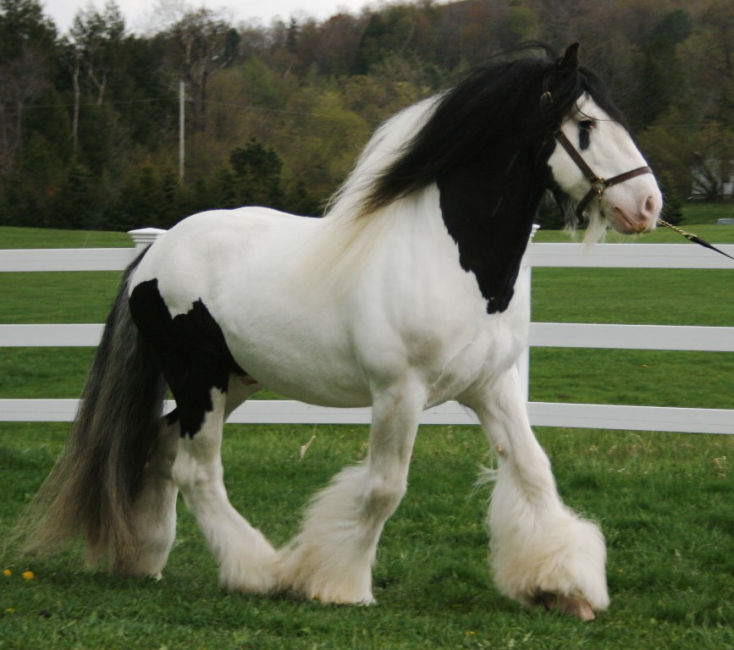
A tobiano Gypsy Vanner gelding for sale may catch your eye because of his markings, mane and overall appearance. A useful purchase decision goes further: what is he trained to do, how does he behave in daily handling, and can you provide the care and professional support he needs?
For this topic, the most important distinction is between riding and driving experience. A listing labeled Driving / Pleasure does not tell you whether a horse is regularly ridden, routinely driven, started in harness or experienced in both. This guide uses real catalog examples to help you investigate those separate questions without treating breed or color as proof of ability.
Compare Alex, Fluffy and Boris without assuming identical training
Alex is recorded as an eight-year-old tobiano Gypsy Vanner gelding, 15.2 hh, with an asking price of $13,900. His listed discipline is Driving / Pleasure. He is a direct recorded match for the search topic, but the discipline field needs clarification before you plan either a ridden or harness assessment.
Fluffy is recorded as a nine-year-old tobiano Gypsy Vanner gelding, 14 hh, at $17,700, also in Driving / Pleasure. His smaller recorded height may appeal to some buyers, but it does not establish rider suitability, carrying capacity or ease of management.
Boris is recorded as an eight-year-old black tobiano Gypsy Vanner gelding, 14.3 hh, at $17,500, in the same category. His color field includes black as well as tobiano; Alex and Fluffy are recorded simply as tobiano. Do not add a base color where the record does not provide one.
These are November 20, 2026 listing snapshots, not independently verified measurements, professional appraisals or confirmation of current availability. Ask the ranch which information is current. The $3,800 difference between Alex and Fluffy, and $3,600 between Alex and Boris, do not establish differences in health or training. The next comparison should be about evidence, not an assumed explanation for price.
Use the Gypsy Vanner collection to see alternatives. If a specific pattern is flexible, a different-colored horse with better-documented experience may fit your plans more closely.
Treat riding and driving as two different evidence checklists
Start by telling the ranch what you actually want to do. Occasional pleasure riding, regular trail outings and carriage driving require different demonstrations and support. If you want both riding and driving, ask for evidence of both; do not assume one follows automatically from the other.
For riding, ask:
- Who rides the gelding, how often, and in what settings?
- What cues does he know for transitions, steering, stopping and backing?
- How does he behave for mounting and after time off?
- Which trail environments or arena exercises has he actually encountered?
- What level of rider has worked with him, and in what supervised circumstances?
For driving, ask a separate set of questions:
- Has he pulled a vehicle, or has training been limited to groundwork and long-reining?
- Was he driven singly or as part of a pair or team?
- What vehicle and harness were used, and when was the last driven session?
- Who conducted the training, and what records or demonstrations are available?
- What does he know about standing, starting, stopping and handling the relevant surroundings?
A short phrase such as “harness broke” is a starting point for questions, not the complete answer. Ask a qualified driving professional to interpret the experience and decide what assessment is appropriate. A horse’s familiarity with one arrangement does not establish readiness for a different vehicle, harness, partner or driver.
Plan a professional demonstration, not a do-it-yourself experiment
Agree on an appointment that matches the intended job. For a ridden assessment, watch a knowledgeable rider demonstrate the horse before deciding whether you should mount. Explain your experience honestly and have your trainer help evaluate suitability.
For harness work, arrange assessment with a qualified driving professional and the ranch. Do not hitch an unfamiliar horse to unfamiliar equipment to see what happens. Discuss the horse’s established training and the setup he knows before planning a demonstration. This article is a buyer-question guide, not driving instruction.
During either assessment, look beyond the most impressive movement. Ask how the horse stands while prepared, responds to familiar cues, waits during a pause and returns to ordinary handling afterward. A calm-looking photograph cannot answer those questions.
If the seller offers recent video, ask for the date and context and distinguish riding footage from driving footage. When suitable video is unavailable, an in-person appointment with independent professional advice is an alternative. Do not replace missing evidence with assumptions about the breed’s reputation.
What tobiano tells you about appearance
The UC Davis Veterinary Genetics Laboratory tobiano explanation describes a white spotting pattern with patches that typically cross the topline. That is general pattern education, not a laboratory result for Alex, Fluffy or Boris.
Tobiano does not identify a horse’s training, temperament or registry status. It also does not tell you which other pattern variants may be present. Use the catalog wording accurately and ask for the horse-specific evidence if exact classification matters for a registry or another purpose.
Request recent, unfiltered photographs of both sides, the face and distinctive markings. Compare them with the horse presented and any identifying documents. Where a DNA result is relevant, ask for the original report associated with the individual horse rather than interpreting photographs as a genetic test.
A coat preference is reasonable, but it should not outweigh your intended job and management ability. The best-looking match may not be the best practical match, and a different pattern does not automatically make an alternative less suitable.
Assess size, tack and the home routine together
Alex’s recorded 15.2 hh means 15 hands and two inches, not 15.2 decimal hands. Fluffy is listed at 14 hands, while Boris’s 14.3 hh means 14 hands and three inches. Ask when and how each measurement was taken. Height alone cannot establish rider fit or carrying capacity.
Discuss the build, condition and movement of the individual horse with your trainer and veterinarian. Arrange suitable saddle-fit advice for a riding purchase; involve an appropriately qualified professional for harness and vehicle fit if driving is part of the plan. Do not choose equipment solely from a breed label or photograph.
Then compare daily routines. Who will handle the horse? How often will you work him? Where will he live, and what turnout and companionship will he have? Ask how those arrangements differ from the gelding’s current routine and what support a transition might require.
Gelding status and a familiar breed description do not guarantee that a horse suits beginners, children or every household. If several people will ride or handle him, explain their abilities and involve your trainer in deciding how to assess the match.
Make grooming and feet handling part of the viewing
The appearance that attracts many buyers also makes the care discussion important. Ask what grooming is currently needed for the individual horse’s mane, tail and lower-leg hair, who performs it and how the horse responds. Do not infer an easy care routine from a polished sales photograph.
Observe appropriate grooming and feet handling, and discuss farrier appointments, bathing, drying and any known skin or hoof-care needs. Ask your veterinarian or farrier about concerns rather than diagnosing a horse from photographs. Request dated care records where available; this guide does not claim that any example horse has a particular condition.
Discuss loading, standing at the trailer and handling away from home if outings are part of your plans. Ask for recent examples in ordinary circumstances. Do not stage extreme distractions to test an adjective such as quiet. A controlled assessment is more useful than pushing horse or handler beyond their experience.
Keep registration and veterinary evidence separate
Ask whether registry papers are available, whether identifying details match the gelding and whether the seller can complete the transfer. A Gypsy Vanner breed entry does not, by itself, prove GVHS registration, parentage or eligibility for a particular class. Confirm any claim using the relevant documents and registry requirements.
For veterinary questions, ask which dated treatment, vaccination, dental and farrier records can be shared. Explain your intended riding or driving workload to the veterinarian arranging a purchase examination. The AAEP purchase-examination guidance emphasizes communication between buyer and veterinarian to tailor the assessment.
The scope of that examination, any additional tests and the interpretation of findings belong with the veterinarian. This article does not certify the health of Alex, Fluffy or Boris, claim a veterinary review or guarantee future performance. Training demonstrations, registration checks and veterinary assessments answer different questions; keep all three on your checklist.
Confirm the purchase and transport arrangements
Before paying, confirm identity, current availability, agreed price and included documents. Review the buying steps and full purchase terms. The stated terms include a 40% deposit applied to the price, the remaining 60% before departure and a 30-day money-back guarantee starting when the horse arrives; read the complete return conditions and buyer-paid return transport requirement.
For delivery, use the hauling information to begin a destination-specific conversation. Get written confirmation of costs, timing, paperwork and any applicable offer. Do not assume that a single-horse purchase or every location qualifies for a promotion.
Brownsville ranch visits are by appointment. Contact the ranch with the gelding’s name, your riding or driving experience, intended job, destination and preferred dates. Ask for an appointment that addresses the skills you need rather than a general appearance-only viewing.
Buyer answers
Does a Driving / Pleasure label prove a horse rides and drives?
No. Ask for separate history and appropriate demonstrations. Clarify whether the horse has pulled a vehicle, which arrangement he knows and when he last worked in it.
Is a smaller Gypsy Vanner automatically easier for a beginner?
No. Height and breed do not establish suitable training or behavior. Compare the rider’s experience, equipment fit and the horse’s established routine with professional advice.
Does tobiano mean the horse is registered?
No. Coat pattern and registration are different facts. Ask for matching registry documents and transfer arrangements if registration matters to your purchase.
What if the color matches but the experience does not?
Broaden the shortlist. Our Horses for Sale comparison guide helps you compare unanswered questions and practical fit. Choose demonstrated experience and manageable care needs before a particular pattern.