
Buying Guides
Appaloosa Ranch Horses for Sale: Choosing a Working Partner
· 8 min
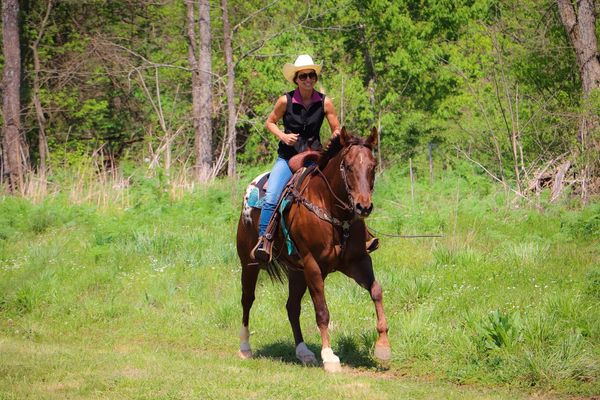
Looking for Appaloosa ranch horses for sale? Evaluate the job, the individual horse, registration records and veterinary findings before choosing your next working partner.
Appaloosa ranch horses for sale: the short answer
When comparing Appaloosa ranch horses for sale, choose for the work you actually need, not for spots or a broad “ranch broke” label. Ask for recent evidence of the horse performing relevant tasks, verify any Appaloosa Horse Club registration claim, try the horse with appropriate supervision, and arrange a buyer-directed veterinary purchase examination. No breed label, coat pattern or sales video guarantees suitability.
This guide is about a specific decision: selecting an Appaloosa as a ranch riding partner. It is not a list of guaranteed available horses or a promise that every Appaloosa is cattle-trained. You can browse current horse listings, then ask the seller to confirm availability and the experience of each individual horse.
1. Define the ranch job before defining the horse
A horse used to check fences may need a different background from one used to sort cattle, rope or carry an inexperienced rider across open country. “Ranch horse” does not describe one universal training standard. Write down the work, terrain, frequency and rider before contacting sellers.
For example, a buyer who rides twice a month on familiar pasture trails should not assume they need the same horse as a rider moving cattle several days a week. Likewise, a horse comfortable following another horse may not yet be comfortable leaving a group alone. Neither situation automatically makes it a bad horse; it changes the match.
Build a short job description:
- Primary work: pasture riding, fence checks, gathering cattle, sorting, or another clearly named task.
- Environment: open pasture, uneven ground, gates, roads, water crossings or busy facilities.
- Rider: current skill, confidence, balance and experience with working horses.
- Routine: how often the horse will be ridden and how it will be housed.
- Non-negotiables: behaviors or maintenance needs your household can or cannot manage.
UConn Extension's horse-selection questions are a useful starting point for matching a horse to the buyer rather than buying on appearance alone. Share your written requirements with sellers so the conversation starts with suitability.
2. Turn “ranch broke” into observable evidence
Instead of asking only whether a horse is ranch broke, ask what that means in its current home. Has it worked around cattle, or mainly been ridden on ranch land? Does it open a gate with a rider, stand while someone checks a fence, or load calmly for a trip to another property? Who usually rides it, and how recently?
Ask the seller to describe the last ordinary working ride, including anything that was difficult. A specific account is more useful than a string of labels such as bombproof, finished or family-safe. Be especially cautious about language that promises a horse cannot react or will suit every rider.
Request footage that matches the job. For pasture work, that might include leaving companions, walking on a loose rein and standing quietly. For cattle work, ask for footage of the actual cattle task, not simply a horse standing near a herd. Relevant evidence matters more than dramatic editing.
Keep the comparison fair. A horse working confidently with a skilled rider in familiar surroundings may respond differently with you. Ask which cues the rider uses and whether the horse depends on regular work. Our guide to reading horse-sale videos explains why ordinary, continuous footage helps you ask better questions without replacing an in-person assessment.
3. Verify the Appaloosa, not just the coat
An attractive spotted coat is not the same thing as verified Appaloosa Horse Club registration. According to the ApHC registration quick facts, registration classification involves eligibility and specified coat-pattern or Appaloosa-characteristic requirements; eligible solid horses may have a different classification.
If a listing says registered, ask to see the certificate and compare the registered identity with the horse presented. Confirm ownership and what paperwork will be needed for a transfer. If records are unclear, contact the Club rather than guessing from a photograph, pedigree claim or seller's informal description.
Registration can matter for identity, breeding plans and eligibility for particular events. It does not certify ranch training, good manners, soundness or a suitable match for your riding level. Those questions still require separate evidence.
For an unregistered horse, be clear about what you are buying and whether registration is important to your intended use. Avoid paying for a registration claim that has not been demonstrated. The ApHC registration tips provide additional context, but the Club is the appropriate place to resolve an individual paperwork question.
4. Plan a practical, supervised viewing
Ask the seller to handle and ride the horse first. Watch ordinary preparation as well as the ridden work: catching, leading, grooming, saddling, mounting and standing. Explain your riding experience honestly and bring a qualified trainer if you need help judging the match.
If it is appropriate for you to ride, start in a controlled setting. A viewing should not become a dangerous test of courage. Do not provoke the horse, introduce unfamiliar cattle work or attempt a task beyond your ability just to see what happens. Agree on safe activities beforehand.
Pay attention to transitions and recovery as well as movement. Can the rider ask for a walk after a faster gait? Does the horse remain manageable when asked to stand? What happens when it leaves a companion? Describe the behavior you actually observe rather than attaching an absolute safety label.
Record questions after the viewing. If a task was not demonstrated, mark it as unknown rather than assumed. University of Missouri Extension's buying guidance reinforces the value of examining the individual horse and making a deliberate purchase decision.
5. Put the purchase examination around the intended use
Arrange an independent veterinary purchase examination and tell the veterinarian what you plan to do with the horse. Intended use, known history and your tolerance for maintenance should help shape the discussion about examination scope and any additional diagnostics.
The AAEP guidelines for reporting purchase examinations explain the veterinarian's role in documenting findings. A purchase examination informs your decision; it is not a universal pass-or-fail certificate or a guarantee of future soundness.
Ask the seller for available veterinary records, current medications, known injuries and maintenance history. Discuss any gaps with the examining veterinarian. An absence of records does not establish good health, and an old examination cannot tell you everything about the horse's current condition.
Use the findings to decide whether this horse fits this job and this buyer. A management requirement that is workable for one experienced owner may be unrealistic for another. Do not let urgency, travel costs or an appealing coat make that decision for you.
6. Ask careful Appaloosa-specific eye questions
Eye history deserves a thoughtful discussion, not alarmist breed stereotypes. UC Davis Veterinary Genetics Laboratory explains that horses with two copies of the leopard-complex variant, LP/LP, have congenital stationary night blindness and describes increased equine recurrent uveitis risk associated with leopard complex.
That information does not diagnose the horse in front of you. Do not infer genotype or health from an attractive coat photograph. Ask whether relevant testing or eye records exist, whether the horse has had episodes of eye discomfort, and whether the seller has noticed difficulties in low-light settings. Let your veterinarian decide what evaluation is appropriate.
UC Davis's equine recurrent uveitis overview provides further context. This guide is buyer education, not veterinary advice. A qualified veterinarian should interpret an individual horse's findings and explain their significance for your plans.
7. Compare value without inventing a breed price
There is no single reliable price for an Appaloosa ranch horse. Age, documented training, current condition, experience, location and the seller's terms all affect a particular offering. A low asking price is not automatically a bargain, and an impressive price is not proof of a suitable working horse.
Compare evidence alongside cost. If one seller demonstrates the exact work you need and another offers only a description, the listings are not equivalent. Ask what is included in the sale and what ongoing maintenance may be required.
Budget beyond the purchase: examination, professional advice, transport, suitable equipment, feed, hoof care and routine veterinary care. Get current quotes for your own circumstances. Avoid planning around invented statewide averages or treating an advertised price as a complete ownership budget.
8. Make a Brownsville inquiry useful
Equine Horses Ranch is in Brownsville, Texas, at 5413 FM 1732, Brownsville, TX 78520. Use our current listings as a starting point and contact the ranch to confirm which horses are available, whether an Appaloosa matches your work, and whether a viewing can be arranged. This article does not promise current Appaloosa ranch-trained inventory.
A useful message is specific: “I am looking for an Appaloosa for pasture riding and fence checks. I ride weekly, have intermediate experience, and need to discuss leaving a group and working gates.” Add your budget, destination and preferred visit dates without assuming a particular horse can perform those tasks.
Review how to buy before committing and discuss hauling arrangements before scheduling transport. Confirm purchase terms in writing and read the purchase terms rather than relying on an article summary of the agreement.
Questions buyers often ask
Are Appaloosas automatically good ranch horses?
No. Breed identity does not establish training or rider suitability. Evaluate the individual horse against the specific ranch job and your experience.
Does a spotted coat prove ApHC registration?
No. Ask for the certificate, verify the horse's identity and check unresolved registration questions with the Appaloosa Horse Club.
Can I buy confidently from a video alone?
Videos can help shortlist horses and identify questions. They cannot replace an appropriate in-person assessment, independent advice or veterinary examination.
What should I ask before traveling to see a horse?
Confirm current availability, ownership, relevant training evidence, asking price, viewing arrangements and access for your independent veterinarian. Clarify which tasks have actually been demonstrated.
Your final ranch-horse shortlist
Before sending a deposit, make sure you can explain why the horse fits your work. Keep a written record of the task evidence, registration information, observed behavior, veterinary findings and agreed terms. Leave unanswered questions visible rather than filling them with assumptions.
The strongest outcome of a search for Appaloosa ranch horses for sale is not merely finding a spotted horse. It is finding an individual whose demonstrated abilities, care needs and temperament fit your plans. Send us your requirements to start a focused conversation, and use our horse-and-rider matching guide if you need help refining the brief.
Editorial note: Written by Equine Horses Ranch as general buyer guidance. Sources are linked beside the relevant topics; no individual horse's health, registration or working ability is certified by this article.