
Buying Guides
Blue Roan Horse for Sale: Compare the Ride, Not Just the Coat
· 8 min
Compare blue roan Quarter Horses, gaited horses and ponies using real catalog examples, a practical shortlist and questions that put riding suitability before color.
Looking for a blue roan horse for sale? Start with the ride
A search for a blue roan horse for sale can return very different horses: a Quarter Horse gelding, a gaited trail horse, a working-equitation prospect or a pony mare. The shared color does not make them interchangeable. Before comparing asking prices, decide what you need to ride, what size suits the rider and which individual horse has relevant demonstrated experience.
Browse our current horse listings and use the examples below as starting points, not guaranteed recommendations. Confirm current availability, records and suitability with the seller before traveling or paying. The purpose of this guide is to help you turn a broad color search into a useful riding shortlist.
If you are specifically seeking a mare or want a detailed discussion of blue roan versus gray, read our separate blue roan mare guide. This article takes a different approach: comparing riding types, catalog information and the evidence you need to choose between them.
1. Four riding questions to answer before you shop
Begin with a description of your actual riding, not an idealized photograph. Where will you ride most often? How experienced is the least experienced intended rider? What movement do you want? How regularly will you work the horse?
A rider looking for a gaited trail partner may have different priorities from someone who wants ranch versatility. A child's pony search raises different size and supervision questions from an adult's full-sized riding horse search. Those differences deserve attention before color or price.
Write down four answers:
- Use: trail riding, ranch riding, arena work, another specified discipline, or a combination.
- Rider: current experience, confidence and any physical considerations to discuss with qualified help.
- Movement and size: the gait you want to experience and measurements appropriate to your rider and equipment.
- Routine: how often you ride, whether you ride alone or with companions, and the facilities you can provide.
UConn Extension's horse-selection guidance encourages matching the individual horse to the buyer. A useful search brief combines that match with your color preference: “I prefer blue roan, but I need an appropriate trail partner for my current experience.”
2. Compare real catalog examples without assuming a match
Equine Horses Ranch's catalog identifies several blue roan horses across different types. The following details come from their individual listings; they are not independent certifications of health or training. Open the listing for the full description, ask for recent evidence and confirm whether the horse is still available.
Quarter Horse example: Whiskey
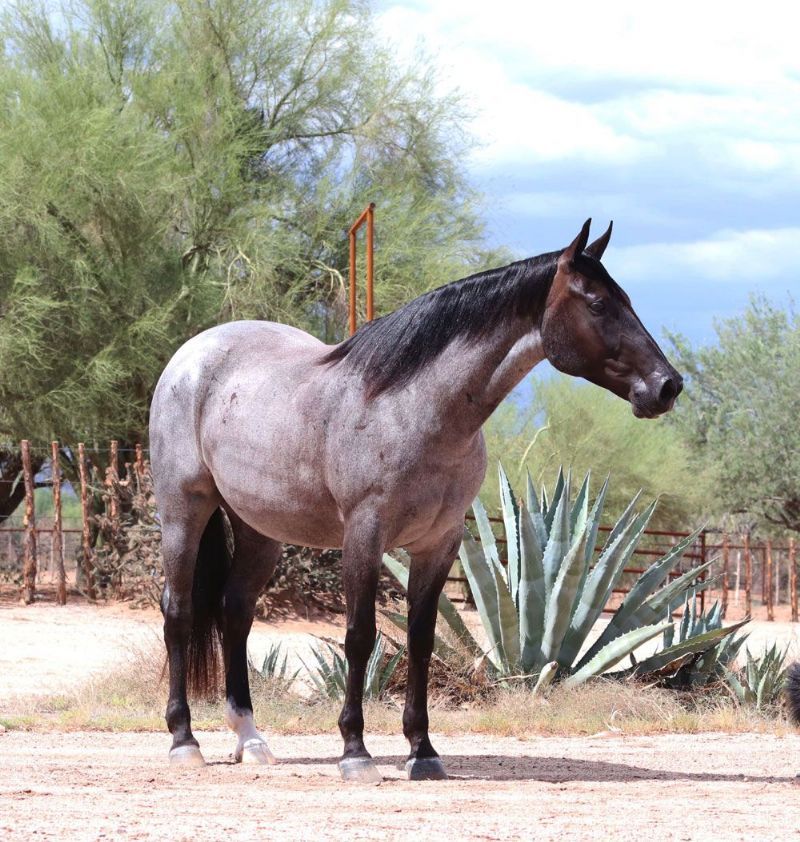
Whiskey is listed as a blue roan American Quarter Horse gelding, standing 16.2 hands, with Ranch Versatility / Trail recorded as his discipline. His real photograph accompanies this article.
That is a useful starting point if you are comparing full-sized stock-horse riding options. It is not proof that his height or background fits you. Ask which work he has done recently, who rides him, how he responds to ordinary cues and what a supervised viewing can demonstrate. Check measured height and equipment fit rather than treating a larger horse as automatically better.
Gaited example: Blue
Blue is listed as a Tennessee Walking Horse gelding, standing 16 hands, with Gaited Trail recorded as his discipline.
If you are looking for gaited riding, ask for continuous footage of his normal movement and discuss your own experience with that type of horse. A description cannot tell you how the ride feels to you. Arrange an appropriate trial rather than assuming that a breed label delivers the exact movement or comfort you want.
Working-equitation example: Davis
Davis is listed as a blue roan Azteca gelding, standing 14.3 hands, with Working Equitation recorded as his discipline.
A buyer interested in this kind of work should ask what that description means in his current training. Request relevant demonstrations instead of translating a discipline label into an assumed competition record or training level. His listing is a lead for a focused conversation, not evidence that every blue roan horse has the same abilities.
Pony example: Amigo
Amigo is listed as a blue roan Welsh Pony mare, standing 12 hands, with Kids Trail / Lead Line recorded as her discipline.
A pony example helps illustrate how broad the color search is. Size and a child-oriented listing label do not guarantee safety for a particular child. Discuss the rider, supervision and recent handling with qualified help. Do not compare a pony with a full-sized horse as though coat color makes them substitutes.
3. Read a listing in three layers
A practical way to compare horses is to separate facts, descriptions and unknowns.
Recorded information includes the listing's breed, sex, height, age and asking price. Check important details against documentation or measurement where appropriate. The presence of a field on a website does not make every underlying claim independently verified.
Seller descriptions include words such as gentle, finished, versatile or trail experienced. Ask what those words mean for this horse and what can be shown. “Trail experienced” might describe frequent solo riding or occasional rides following companions; those are not identical situations.
Unknowns are questions you still need to resolve: recent workload, maintenance, relevant records, behavior in unfamiliar surroundings or suitability with you. Keep these visible in your notes. A beautiful image should not silently answer an unknown.
Our plain-English guide to horse-sale terms expands on descriptions. Use it to improve your questions rather than assigning a universal meaning to every label.
4. Request evidence that matches your intended ride
A good video request is specific and safe. If you want ordinary trail riding, ask for relevant footage of catching, preparation, mounting, walking, standing and the type of riding the seller says the horse performs. If riding away from companions matters, ask whether that can be demonstrated appropriately.
For ranch work, ask what actual tasks the horse has done. Being filmed beside cattle is not the same as demonstrating cattle work. For gaited riding, ask to see the movement in continuous footage at the speeds normally used. For a pony, discuss who handles and rides it and under what supervision.
Do not ask a seller to provoke the horse or manufacture a hazardous situation. The aim is to see ordinary behavior and understand its context. A skilled rider in familiar surroundings can make a task look simpler than it may be for a different rider.
Our guide to horse-sale videos explains what footage can and cannot establish. Use video to decide whether a viewing makes sense, not as a substitute for professional advice or a purchase examination.
5. Try the individual, not the search result
At a viewing, ask the seller to handle and ride first. Observe preparation as well as the riding itself. Explain your experience honestly, bring a qualified trainer if needed and agree on a suitable environment for any trial.
Notice how the horse responds to cues, transitions and requests to stand. Ask about routines that help it work well. A horse used to frequent riding may be a different practical choice from one that suits your occasional schedule. Be clear about what you can maintain at home.
If you ride, stay within your ability and use appropriate protective equipment. You do not need to perform advanced work to prove a match. If something feels wrong or unclear, stop and ask for help rather than treating discomfort as a test you must pass.
A successful viewing may also end with deciding not to buy. That is a useful outcome when the horse does not fit. Color should remain a preference, not pressure to accept an unsuitable ride.
6. Keep blue roan claims in perspective
Blue roan is a coat description, not a breed, a temperament rating or a soundness assessment. UC Davis Veterinary Genetics Laboratory's roan resource explains the classic roan pattern and its testing context.
If color verification matters to your plans, ask for appropriate records and professional interpretation. For detailed coat comparisons, use the separate blue roan mare and color guide. Here, the important point is that an appealing color cannot tell you whether the horse fits your job.
Likewise, a color-test report does not replace registration paperwork or a health examination. Ask each document to answer the question it actually addresses. Do not interpret “tested” as a complete certification of health, identity, training and breeding suitability.
7. Organize a purchase examination around your plans
Arrange a buyer-directed veterinary purchase examination and explain what you intend to do with the horse. Share available history and ask the veterinarian to discuss the scope of the examination and any further diagnostics that may be appropriate.
The AAEP guidelines for reporting purchase examinations provide context for documenting findings. A purchase examination supports an informed decision; it is not a guarantee of future soundness or a universal pass-or-fail verdict.
Request veterinary records, current medications and known maintenance requirements. Discuss unanswered questions with the examining veterinarian rather than assuming silence means there is no history to consider. If breeding is part of your plan, raise it separately; it is not automatically covered by a riding-focused examination.
8. Compare total fit and cost
Do not compare every blue roan listing as though it represents the same product. A horse's documented experience, size, type, current condition and terms can differ substantially. Compare options that meet your riding requirements first, then consider the asking price.
Plan for examination, independent advice, transport, suitable equipment and ongoing care. Obtain current quotes for your destination and circumstances. A purchase price alone does not describe the full commitment, and this guide does not invent a statewide average or claim that color creates a fixed premium.
If one horse has relevant demonstrated experience and another still has unanswered training questions, note that difference. Unknowns can affect both suitability and the support you will need after purchase. A lower advertised price is not automatically better value for you.
9. Ask a focused question before traveling to Brownsville
Equine Horses Ranch is at 5413 FM 1732, Brownsville, TX 78520. Contact the ranch to confirm current availability and arrange an appropriate next step. Do not assume that every horse discussed in an article remains for sale or that visits are available without an appointment.
Mention the individual listing if one interests you, then describe your riding requirements. Include your preferred size or type, experience, budget, destination and whether blue roan is essential or simply preferred. Ask what recent footage and records can be reviewed before making travel plans.
Review our buying process, purchase terms and hauling information. Written terms, independent examination and practical transport planning belong in the decision before payment, not after the excitement of finding the right color.
Quick answers before you shortlist a blue roan horse
Is blue roan limited to Quarter Horses?
No. Our catalog examples include different breeds and types. Verify the individual horse's recorded identity and compare its movement, size and experience with your needs.
Should I choose a gaited horse or a stock horse?
Start with your intended riding and the movement you want to experience. Review relevant footage and seek qualified help trying the individual horse rather than relying on a breed label alone.
Does a blue roan horse need less evaluation because it looks ideal?
No. Color does not replace assessment of behavior, training, health, records and rider fit.
Can I rely on the examples in this guide for availability?
No. They identify catalog listings to investigate. Open the current listing and confirm status with the ranch before traveling or paying.
Build a shortlist you can explain
Your final shortlist should show why each horse is worth viewing: relevant demonstrated work, a plausible rider match, clear records and a care routine you can manage. Put unknowns beside those strengths and resolve them with appropriate help.
A thoughtful search for a blue roan horse for sale ends with a riding partner, not just a color match. Send us your riding requirements to begin a focused conversation, and keep the individual horse at the center of the choice.
Editorial note: This original Equine Horses Ranch guide uses identified catalog examples and linked professional resources. Listing descriptions are not independent certifications; availability, health and suitability must be confirmed for the individual horse.