Buying Guides
Dappled Buckskin Quarter Horse Mare for Sale: Compare Color, Size and Riding Fit
· 8 min read
Compare Aiysha with other buckskin mares in our Brownsville catalog. Learn what photographs, measurements, registration documents and a supervised viewing can tell you before buying.
By Equine Horses Ranch · Listing snapshot: November 20, 2026
A search for a dappled buckskin Quarter Horse mare for sale narrows the look you want, but it does not yet identify the ride you need. A useful shortlist connects the mare’s recorded color with her size, handling, riding experience and documents. This guide focuses on that specific decision rather than repeating a general horse-buying checklist.
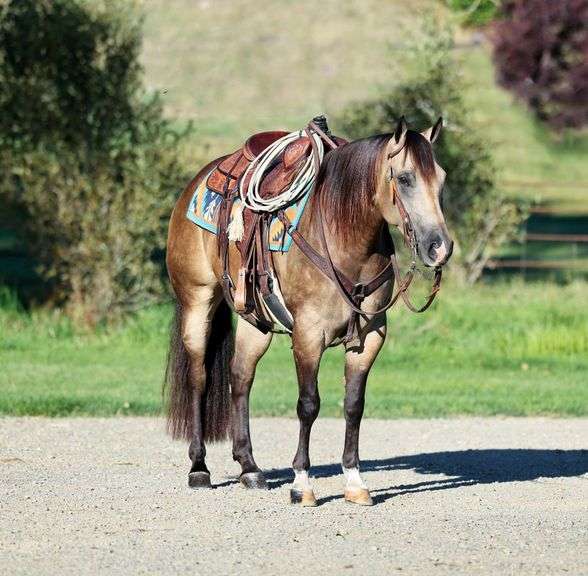
Our catalog includes Aiysha, recorded as a dappled buckskin American Quarter Horse mare, and several buckskin mares that offer useful comparisons. The figures below are a dated snapshot of listing information, not independently verified measurements or a promise that any horse remains available. Open the individual page and confirm the current details with the ranch.
Start with Aiysha, then compare the alternatives
Aiysha’s listing records a seven-year-old mare, 15 hh, with an asking price of $14,800. Her listed discipline is Ranch Versatility / Trail. That makes her the closest recorded match to this guide’s color-and-sex search, but the category alone does not establish her experience on particular trails, with cattle or in competition.
Two comparisons help separate the color preference from the purchase decision:
- Amber is recorded as a seven-year-old buckskin American Quarter Horse mare, 15.1 hh, at $15,000. Her color field says buckskin, not dappled buckskin. Ask how her movement, saddle fit and everyday handling compare with Aiysha’s rather than assuming the extra inch makes her more suitable.
- Lucy is recorded as an eight-year-old buckskin American Quarter Horse mare, 15 hh, at $14,900. Her listed discipline is also Ranch Versatility / Trail. Similar size and category make her a useful comparison, not proof of identical training.
These three asking prices sit close together. A $100 or $200 difference is less informative than the horse’s demonstrated response to your cues, known maintenance and the cost of an examination and delivery. They are examples from one catalog, not a market-wide valuation or an appraisal.
Explore the broader American Quarter Horse collection if the individual ride matters more to you than the exact shade. The buckskin collection includes other sexes and breeds; do not assume every horse there is a Quarter Horse mare.
What buckskin color can—and cannot—tell you
The UC Davis Veterinary Genetics Laboratory explanation of cream dilution identifies buckskin as a bay base coat with one copy of the cream dilution variant. That is a general explanation of coat color, not a genetic test result for any mare in our catalog.
In this guide, “dappled” follows Aiysha’s recorded listing description. It is not an additional breed, a registration category or evidence of a particular temperament. A photograph cannot establish a horse’s genetic result, health status or riding suitability.
Request recent, unfiltered photographs showing both sides, the face, legs and markings in ordinary daylight. Ask when each image was taken and whether it shows the mare you are discussing. Compare visible markings with the identifying description on her documents. If a specific genetic color result matters to a breeding plan, ask for the laboratory report tied to that horse’s identity rather than interpreting a sales photograph.
A coat preference is reasonable. It becomes a poor buying method when it takes the place of movement, manners and suitability. Do not pay a premium on the assumption that dapples imply better health, training or future foal color.
Read height as a measurement, not a promise of rider fit
Aiysha and Lucy are listed at 15 hh, while Amber is listed at 15.1 hh. In hands-and-inches notation, 15.1 means 15 hands and one inch, not 15.1 decimal hands. One hand equals four inches. Ask how recently the horse was measured and whether the figure was taken at the withers on level ground.
Height alone does not establish carrying capacity or comfort. Build, conditioning, saddle fit and the rider’s balance also matter. Bring your intended saddle or arrange a professional fit assessment where practical. Your trainer can help evaluate whether you can mount, maintain a balanced position and use the mare’s existing cues without confusion.
Before traveling, write down your riding experience and goals. A rider seeking occasional quiet outdoor rides may need different evidence from someone pursuing ranch classes. Use the same goals for all three mares so a striking photograph does not change your requirements halfway through the comparison.
Make the viewing about your actual riding routine
Agree on a supervised assessment with the ranch before the appointment. Tell the person presenting the horse what you can confidently do and where you normally ride. Ask to observe appropriate handling and a demonstration by someone familiar with the mare before deciding whether you should ride.
Useful questions include:
- When was she last ridden, how often does she work, and who usually rides her?
- What happens after time off, and what preparation is normally needed before mounting?
- Which trail environments has she actually encountered, and when?
- How does she respond to separation from companions, unfamiliar surroundings and ordinary distractions?
- What are her established cues for transitions, stopping and steering?
- How does she behave for catching, grooming, feet handling and loading?
- Have handlers noticed changes associated with her reproductive cycle, and how have those been recorded or managed?
Ask for examples with dates and context, not just adjectives. “Trail” could describe very different terrain and workloads. If cattle work or showing matters, request horse-specific records or a demonstration appropriate to that job. A breed label and discipline field do not substitute for that evidence.
Do not stage extreme tests to see whether a horse reacts. A controlled assessment with a knowledgeable professional is more useful than pushing beyond the horse’s or rider’s experience. If recent video is unavailable, an in-person appointment and independent assessment can still support a decision; video is helpful evidence, not a purchase requirement.
Separate riding suitability from breeding claims
A mare can be a riding prospect without being presented as a proven broodmare. If you are buying primarily to ride, ask how her routine and behavior fit your plans. If breeding is part of the goal, create a separate evidence checklist with your veterinarian.
Ask whether registration papers are available, whether the seller can complete the transfer, and whether the document’s identifying details match the horse. A listing that says American Quarter Horse is not, by itself, proof of AQHA registration. Do not infer parentage, offspring history, fertility or an in-foal status from breed, color or photographs.
Where genetic or reproductive testing is relevant, ask for the original dated report and discuss its scope with the professional advising you. A color test answers a different question from a disease panel or reproductive examination. None should be described as completed for Aiysha, Amber or Lucy unless the actual horse-specific evidence is supplied.
Arrange veterinary advice before committing
The American Association of Equine Practitioners recommends a purchase examination tailored through communication between the buyer and veterinarian. Explain the work you intend to do, the horse’s disclosed history and any breeding plans so the veterinarian can advise on an appropriate examination.
Ask the ranch for dated veterinary, vaccination, dental and farrier information that can be shared with your chosen veterinarian. Discuss known treatment and maintenance rather than treating a generic health statement as a current record. The examination’s scope, any additional tests and the interpretation of findings belong with the veterinarian; this article is not a diagnosis or a veterinary review of these mares.
Keep a written note of questions that remain unanswered. A purchase examination and a supervised ride provide different kinds of information. Neither should be presented as a guarantee of future performance.
Put the mare, price and delivery arrangements in writing
Before paying, confirm the mare’s identity, current availability, agreed price, included documents and collection or delivery arrangements. The ranch is in Brownsville, Texas; arrange visits by appointment through Contact.
Review the purchase terms and horse-buying steps, rather than relying on a shortened description in a message. The stated terms include a 40% deposit applied to the price, the remaining 60% before the horse leaves the ranch and a 30-day money-back guarantee starting on arrival. Read the full return conditions, including buyer-paid return transport, before deciding.
Discuss your destination and obtain written confirmation of transport cost, timing, paperwork and any offer that applies to your purchase. Do not assume a delivery offer covers every destination or a single-horse purchase. The hauling page is a starting point for that conversation.
Quick answers for a focused shortlist
Is a dappled buckskin mare automatically beginner-friendly?
No. Coat color and sex do not establish rider suitability. Compare the mare’s individual handling and riding history with your ability, then arrange an appropriate supervised assessment.
Do similar ages, heights and prices mean these mares ride alike?
No. Aiysha, Amber and Lucy have comparable recorded figures, but the figures do not describe their cues, energy, movement or routines. Use identical questions and assessment goals for each.
Can I compare these horses without buying for breeding?
Yes. Keep the decision centered on your intended riding and care routine. Verify identity and documents, but do not confuse a riding purchase with an unsubstantiated breeding claim.
What should I send when asking about Aiysha?
Include her name and listing address, your experience, intended riding, approximate budget, destination and preferred appointment dates. Ask which details and documents are current. If she does not fit your plans, compare other mares rather than forcing the purchase to match a color search.
For a wider shortlist, use our Horses for Sale comparison guide. For mare-specific paperwork questions, continue with the American Quarter Horse mare buyer guide. The next useful step is a clear conversation about the individual horse—not collecting more sales adjectives.